
The modern automobile is no longer just a mechanical machine powered by an internal combustion engine or a battery pack. Today, vehicles are complex, rolling data centers. The transformation from purely mechanical systems to highly sophisticated electronic ecosystems has fundamentally changed how people drive, interact with, and rely on their vehicles.
Automotive electronics serve as the nervous system of the modern car. By integrating advanced sensors, microcontrollers, high-speed communication networks, and powerful software, electronics have elevated vehicle safety, optimized performance, and redefined the in-cabin experience. Understanding how these electronic systems function reveals why modern driving is safer, more efficient, and more connected than ever before.
The Foundation of Modern Vehicle Architecture
To understand the impact of automotive electronics, one must look at the underlying architecture. Historically, cars relied on mechanical linkages, cables, and hydraulic pressure to execute commands. Pulling a lever opened a valve, and pressing a pedal physically pushed a piston.
In modern vehicles, these systems have been largely replaced by drive-by-wire technology. When a driver presses the accelerator pedal, a sensor measures the pedal position and sends an electronic signal to the Engine Control Unit. The ECU then calculates the precise amount of fuel and air needed, operating the throttle electronically.
This digital framework relies on a network of Electronic Control Units. A high-end modern vehicle can feature over one hundred individual ECUs, each dedicated to managing specific functions, such as the powertrain, braking, climate control, and infotainment. These modules communicate seamlessly via high-speed data networks like the Controller Area Network bus, Local Interconnect Networks, and Automotive Ethernet. This interconnectedness allows different systems to share data in real time, creating a cooperative environment where the car can actively adapt to changing driving conditions.
Revolutionizing Safety Through Advanced Driver Assistance Systems
Perhaps the most significant contribution of automotive electronics is the drastic improvement in occupant and pedestrian safety. Advanced Driver Assistance Systems utilize an array of electronic sensors, including radar, lidar, cameras, and ultrasonic sensors, to monitor the vehicle’s surroundings continuously.
Collision Mitigation and Prevention
Electronic stability control, anti-lock braking systems, and automatic emergency braking work in tandem to prevent accidents before they occur. If the forward-facing cameras or radar sensors detect an impending collision with another vehicle or a pedestrian, the electronic braking system can apply full stopping power faster than human reaction times allow.
Lane Keeping and Blind Spot Detection
Camera-based systems track road markings to ensure the vehicle remains centered within its lane. If the driver drifts without signaling, the steering ECU can apply subtle torque to the steering wheel to guide the car back into place. Similarly, radar sensors mounted on the rear quarters of the vehicle monitor areas invisible to the driver, flashing warning lights in the side mirrors or vibrating the steering wheel if a lane change is attempted while another vehicle is present.
Adaptive Cruise Control
Traditional cruise control could only maintain a fixed speed, requiring constant driver intervention in fluctuating traffic. Electronic cruise control uses radar and camera data to adjust the vehicle’s speed dynamically, maintaining a safe, pre-set following distance from the car ahead, even bringing the vehicle to a complete stop in traffic jams and resuming automatically.
Optimizing Powertrain Efficiency and Performance
Electronics have allowed manufacturers to extract unprecedented efficiency and power from both internal combustion engines and electric powertrains.
Engine Management Systems
In gasoline and diesel vehicles, the ECU monitors variables such as engine temperature, air intake volume, exhaust oxygen levels, and crankshaft position thousands of times per second. By processing this data, the ECU precisely times fuel injection pulses and spark ignition. This micro-second optimization ensures complete combustion, minimizing harmful emissions while maximizing fuel economy and horsepower.
Electric Vehicle Optimization
In electric vehicles, electronics are even more critical. The Battery Management System monitors the voltage, temperature, and state of charge of thousands of individual battery cells. The BMS ensures that the battery operates within safe thermal limits, balances the load during charging and discharging, and extends the overall lifespan of the pack. Furthermore, power electronics invert the direct current stored in the battery into alternating current to drive the electric motors, managing energy recapture through regenerative braking when the driver decelerates.
Transforming the In-Cabin Experience
The interior of a modern vehicle has evolved into a digital living space, heavily driven by consumer demands for connectivity, entertainment, and intuitive control interfaces.
Infotainment and Connectivity
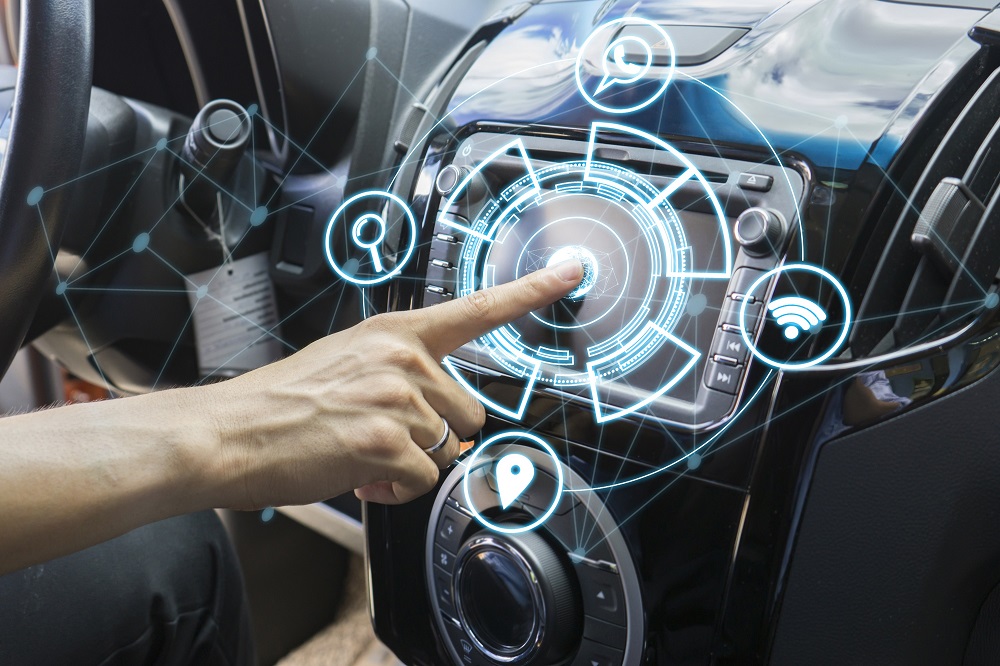
Central touchscreens powered by high-performance graphics processors have replaced rows of physical buttons. These systems integrate navigation, climate controls, and media playback. Through wireless protocols like Bluetooth, Wi-Fi, and cellular modems, vehicles maintain constant cloud connectivity. This allows for real-time traffic updates, streaming audio, and over-the-air software updates that can improve vehicle functionality without requiring a visit to a dealership service center.
Digital Instrument Clusters and Head-Up Displays
Traditional analog needles for speed and engine RPM have given way to high-definition digital displays. These screens can reconfigure themselves based on driver preference, displaying full-screen navigation maps, vehicle diagnostic data, or driver assistance alerts.
Taking this a step further, electronic Head-Up Displays project critical information, such as current speed and turn-by-turn directions, directly onto the windshield. By focusing this data into the driver’s line of sight, the driver does not need to look away from the road, reducing distraction and improving situational awareness.
Enhancing Ride Comfort and Dynamics
Automotive electronics also dictate how a car feels on the road, balancing ride comfort with sharp handling characteristics through active chassis management.
Adaptive Suspension Systems
Electronic suspension systems utilize sensors to measure wheel vertical acceleration, body roll, and steering inputs. The central chassis controller can adjust the damping valves inside the shock absorbers within milliseconds. This allows the suspension to soften instantly over harsh bumps for a smooth ride, or stiffen during aggressive cornering to minimize body roll and improve stability.
Electronic Power Steering
Old hydraulic steering systems provided a fixed level of assist and constantly drained engine power via a belt-driven pump. Electronic Power Steering uses an electric motor controlled by a computer that reads vehicle speed and steering effort. It provides maximum assistance during low-speed parking maneuvers for effortless turning, and reduces assistance at highway speeds to give the driver a firmer, more stable steering feel.
Frequently Asked Questions
What happens if a central electronic control unit fails while driving?
Modern automotive electronics are engineered with fail-safe protocols and redundancies. If a critical ECU experiences a fault, the vehicle typically enters a limp-home mode, which limits engine power and speed to allow the driver to safely pull off the road, while maintaining basic steering and braking capabilities.
How do automotive electronics handle extreme weather and road vibrations?
Electronic components destined for vehicles are certified under strict automotive-grade standards. They undergo rigorous testing to withstand extreme temperatures, continuous mechanical vibrations, moisture, salt exposure, and electromagnetic interference, making them far more durable than consumer electronics like smartphones or laptops.
Do advanced electronics increase the long-term maintenance costs of a car?
While electronic systems reduce mechanical wear by optimizing how components interact, they can increase repair costs if a sensor or module fails out of warranty. Calibrating advanced sensors after windshield replacements or minor collisions requires specialized diagnostic equipment, which can raise specific repair expenses.
How do electronics improve night driving visibility beyond traditional headlights?
Modern vehicles utilize electronic adaptive front-lighting systems. These systems use camera inputs to detect oncoming traffic and automatically dim portions of the high beam to prevent blinding other drivers, while keeping the rest of the roadside illuminated. Some systems also pivot the headlights in the direction of the steering wheel to light up dark curves.
Can a vehicle’s electronic systems be hacked remotely?
As cars become more connected, cybersecurity has become a priority for automotive engineers. Manufacturers implement secure gateways, hardware security modules, and encrypted communication protocols across the vehicle networks to isolate critical driving functions from external wireless entry points like the infotainment system or Wi-Fi.
What is the difference between a microcontroller and an ECU in a car?
A microcontroller is an individual integrated circuit chip that contains a processor, memory, and input/output peripherals. An Electronic Control Unit is the complete, self-contained electronic module or housing that includes the microcontroller, circuit board, capacitors, resistors, and protective casing required to perform a specific vehicular task.
How do electronics assist with trailering and towing heavy loads?
Electronics monitor the vehicle’s lateral movement and yaw rate sensors to detect trailer sway. If the system senses the trailer is oscillating dangerously, the electronic stability control can automatically apply selective braking to individual vehicle wheels and reduce engine torque to stabilize the truck and trailer combination without driver intervention.
About the Author