

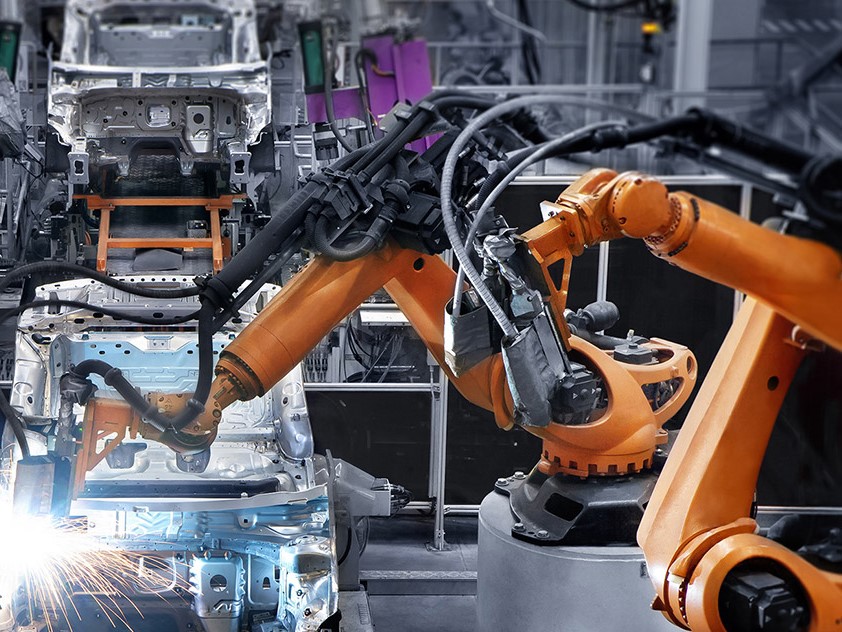
The concept of a robot has transitioned from the rigid, isolated machinery of traditional factory floors to a fluid, intelligent reality. Across the globe, industries are facing profound structural challenges, including shrinking working-age populations, rising logistical complexities, and the need for higher operational efficiency. In response, the convergence of advanced mechanical engineering and artificial intelligence is reshaping how physical tasks are executed.
The future of robotics technology is defined by autonomy, cognitive adaptability, and seamless human-machine collaboration. Robots are no longer blind executioners of predefined code; they are dynamic systems capable of interpreting their surroundings, learning through experience, and making independent decisions in real time. Analyzing the trajectory of robotics across major industrial sectors reveals how this technology is fundamentally rewriting the rules of global productivity.
AI and Agentic Autonomy: The Cognitive Shift
The most critical breakthrough in modern robotics is the evolution of the software driving the hardware. For decades, programming a robot required writing specific coordinate pathways. If an object moved by a fraction of an inch, the system failed.
Modern robotics leverages a hybrid approach known as agentic AI, which merges analytical data processing with generative adaptability. Analytical frameworks allow robots to detect micro-patterns and predict mechanical failures before they happen, while generative models enable machines to understand natural language instructions and vision-based commands.
This cognitive framework allows robots to learn through imitation and simulation. Rather than spending thousands of hours in physical environments to teach a machine how to grip an unfamiliar object, developers train robotic foundation models on vast libraries of human video data. The robot refines these general movement patterns inside virtual simulators before ever entering a real-world warehouse or hospital, reducing implementation timeframes from months to days.
Manufacturing and the Industrial Realization of Humanoids
The industrial sector has reached a key turning point as IT (Information Technology) completely merges with OT (Operational Technology). This data-level integration connects a factory’s enterprise software directly to physical machines on the floor, allowing assembly lines to alter their configurations dynamically based on real-time supply chain updates.
The Scale of Humanoid Deployment
Humanoid robotics has officially moved past experimental prototypes into active industrial piloting. Major automotive manufacturers are leading this shift, actively integrating human-shaped robots into production ecosystems to handle component assembly, logistics tracking, and material transportation.
The primary advantage of the humanoid form factor is its ability to operate seamlessly within factories and spaces originally engineered strictly for human dimensions, eliminating the need for expensive structural redesigns.
Advanced Vision-Guided Metrology
Traditional automated quality control relied on fixed, inline cameras that could miss defects if an object was slightly misaligned. Next-generation robotic arms feature integrated machine vision powered by local edge computing. As a component moves down the assembly line, the robotic arm dynamically positions itself to conduct high-precision three-dimensional multi-view scans. This allows the system to identify structural micro-defects and verify alignment tolerances with zero manual intervention.
Logistics, Warehousing, and Autonomous Material Flows
The explosion of global e-commerce has placed an unsustainable burden on traditional warehousing infrastructure. To keep pace with demands for rapid, round-the-clock shipping timelines, logistics operations have adopted highly coordinated networks of mobile and stationary machines.
Next-Generation Autonomous Mobile Robots
Early automated guided vehicles required magnetic strips or physical wires embedded in warehouse floors to navigate. Modern Autonomous Mobile Robots utilize advanced lidar, depth cameras, and simultaneous localization and mapping algorithms to move freely through dynamic environments. These units navigate crowded warehouse floors safely, mapping alternative routes instantly if a human worker or a forklift blocks their path, thereby optimizing internal material flows without relying on fixed external infrastructure.
Automated Sortation and AI End-Effectors
The final frontier in warehouse automation is the sorting of variable, unstructured items. Advanced robotic sorting stations now employ sophisticated computer vision coupled with soft, biomimetic end-effectors, which are specialized robotic hands. These systems can instantly differentiate between a fragile glass bottle, a heavy metal tool, and a flexible plastic mailer, adjusting their grip pressure dynamically to pack shipping containers with maximum space efficiency and zero breakage.
Healthcare, Surgical Precision, and Service Robotics
In the medical field, robotics technology is expanding its role from a precision surgical tool to a comprehensive healthcare support system.
Tele-Robot Surgery and Micro-Manipulation
Surgical robotic platforms allow physicians to perform highly complex procedures through microscopic incisions. Moving forward, these systems are integrating enhanced tactile feedback, providing surgeons with a simulated sense of touch through their control consoles. Furthermore, high-speed tele-robotics infrastructure enables elite specialists to perform surgeries remotely on patients located thousands of miles away, bypassing geographical limitations to deliver life-saving care.
Clinical Assistive Robots
Beyond the operating theater, mobile service robots are managing high-volume, repetitive hospital logistics. Autonomous units transport hazardous medical waste, deliver prescription medications directly to nurse stations, and sanitize patient rooms using specialized ultraviolet disinfection arrays. By delegating these essential administrative and maintenance tasks to automated systems, healthcare networks allow nursing staff to focus their energy entirely on direct patient care.
Agriculture, Environmental Monitoring, and Field Robotics
Global agriculture is undergoing an automation revolution driven by labor scarcity and the critical need to optimize natural resource utilization. Field robotics allows farms to transition from broad, wasteful chemical applications to ultra-precise, individual plant management.
- Autonomous Harvesters: Utilizing spectral imaging, robotic harvesters analyze crop color and density to pick ripe fruit gently without damaging the surrounding plant structure.
- Laser-Guided Weeding: Micro-robots navigate crop rows autonomously, using computer vision to differentiate between weeds and crops, neutralizing invasive plants instantly with targeted thermal lasers to eliminate chemical herbicide reliance.
- Drone-Based Soil Analytics: Unmanned aerial robotics networks conduct continuous multi-spectral mapping flights, delivering real-time data regarding soil moisture profiles and localized pest outbreaks directly to automated irrigation networks.
Frequently Asked Questions
What is the primary difference between a cobot and a traditional industrial robot?
Traditional industrial robots are high-speed, heavy machines that operate inside isolated safety cages to protect human personnel from severe injury. Collaborative robots, or cobots, are engineered with integrated force-torque sensors and rounded profiles, allowing them to work directly alongside human operators safely by slowing down or stopping instantly if they detect physical contact.
How do edge AI systems improve the operational safety of industrial mobile robots?
Edge AI processes spatial and sensor data locally on the robot’s physical computer hardware rather than transmitting the data to a remote cloud server. This local architecture eliminates network latency delays, allowing the mobile robot to detect an obstacle or a human worker and apply braking commands within milliseconds, ensuring reliable safety even during network disconnects.
What is predictive robotics maintenance, and how does it prevent factory downtime?
Predictive robotics involves the continuous monitoring of a machine’s internal performance metrics, such as motor temperature, electrical current draw, and vibration profiles. Machine learning models analyze this data to identify early indicators of mechanical wear, allowing maintenance teams to schedule targeted repairs before an unexpected hardware failure causes an expensive factory shutdown.
How do soft robotics end-effectors differ from traditional mechanical grippers?
Traditional mechanical grippers use rigid metal or plastic jaws that exert uniform pressure, which can crush delicate objects. Soft robotics end-effectors are constructed from flexible, elastomeric materials that expand or contract using pneumatic air pressure, allowing the robotic hand to conform naturally to irregular shapes and handle fragile items like eggs or soft produce safely.
Why is training data considered the main bottleneck for advanced humanoid development?
Humanoid robots must operate in highly unpredictable environments designed for humans, requiring complex coordination between vision and physical movement. Generating high-quality, step-by-step physical training data for every possible real-world variable is incredibly slow and expensive, forcing developers to rely on complex human video parsing and simulated software training to fill the data gap.
What is the operational lifespan of a modern industrial robotic arm under continuous use?
The operational lifespan of a premium industrial robotic arm typically ranges between fifteen thousand to twenty thousand hours of continuous operation before requiring a major mechanical overhaul or joint replacement. With strict adherence to predictive maintenance schedules and routine lubrication, many systems continue to perform at high precision for over ten years.
How do agricultural robots manage navigation in fields without reliable GPS signals?
When satellite GPS signals are obstructed by heavy tree canopies or remote topography, agricultural field robots rely on a combination of visual odometry and real-time kinematic positioning. The onboard computer processes optical data from stereoscopic cameras to track row patterns and landscape features, maintaining precise navigation paths down to the millimeter level.
About the Author